
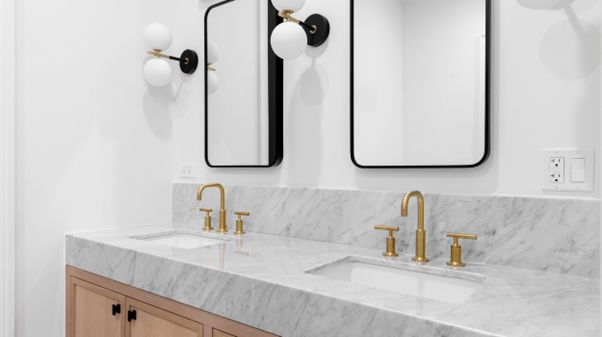
Picking the right countertop for your kitchen or bathroom can feel like a huge decision. Quartz countertops and granite countertops are two of the most popular choices, but they are very different. Both are tough and long-lasting, but they each have features that might fit your style and lifestyle better. Let’s break it down so you can make the right choice for your home.
Why Quartz Countertops Are Super Popular?
Quartz countertops are not completely natural—they are engineered. That means they are made from crushed quartz mixed with resin. This gives them a smooth, polished look and makes them super easy to care for.
Here’s why people love quartz:
- Super Low Maintenance: No need to seal quartz countertops. Just clean with soap and water.
- Even Patterns: The design looks the same across the whole surface, so it’s predictable and neat.
- Stain Resistant: Drinks or sauces won’t soak in. Wipe them up, and you’re done.
- Color Variety: You can get almost any color you want, from pure white to deep black.
Quartz countertops are perfect if you have a busy kitchen or kids running around. They look great all the time and don’t need much care.
What’s Cool About Granite Countertops?
Granite countertops are all natural. Each slab comes from a quarry, so every piece is unique. No two granite countertops are the same.
Here’s why granite is still a favorite:
- Durable: Granite can handle heat really well. Hot pots and pans won’t damage it.
- Natural Beauty: The swirls, veins, and colors look fancy and luxurious.
- Lasts Long: With proper care, granite countertops can last for decades.
- Adds Value: Many homebuyers love natural stone, which can boost resale value.
Granite countertops do need a bit more care. You have to seal them every so often to protect against stains and germs. But if you love a natural, bold look, granite countertops are hard to beat.
Quick Side-by-Side Look
Here’s a simple table to compare quartz countertops and granite countertops:
| Feature | Quartz Countertops | Granite Countertops |
| Material Type | Engineered | Natural |
| Maintenance | Low, no sealing | Medium, needs sealing |
| Appearance | Even, uniform | Unique, natural |
| Stain Resistance | High | Medium |
| Heat Resistance | Medium | High |
| Color Options | Many colors | Mostly natural tones |
| Lifespan | 15–30 years | 20–50 years |
Looking at the table, it’s clear that your choice depends on what matters most to you. Do you want low-maintenance? Go quartz. Want natural patterns and heat resistance? Pick granite.
How to Pick the Right Countertop
Think about your kitchen habits and lifestyle.
- Do you cook a lot? Granite countertops can take heat better.
- Do you like a perfect, uniform look? Quartz countertops are flawless.
- Are you worried about spills? Quartz is more stain-resistant.
- Do you want a natural, one-of-a-kind look? Granite wins.
Both quartz and granite are strong, stylish, and can last a long time. It just comes down to your priorities.
Handy Tips Before You Buy
Here are some tips to make choosing easier:
- Check in Your Home Light: Samples can look different at home than in a showroom.
- Think About Care: Granite needs sealing; quartz does not. Decide how much time you want to spend cleaning.
- Set a Budget: Some granite slabs are expensive, especially rare colors.
- Consider Resale: Natural stone like granite often appeals to buyers.
Taking these steps can save you time, money, and headaches.
Fun Design Ideas
You can mix and match materials to create a cool look.
- Match granite countertops with wood cabinets to create a warm, rustic look.
- Use quartz countertops with modern cabinets for a sleek, clean look.
- Add colorful backsplashes to brighten up either surface.
- Use different countertop materials in the same kitchen. For example, an island with quartz, while the rest is granite.
Mixing materials can give your kitchen or bathroom personality and make it feel custom.
Maintenance Made Easy
Even though quartz countertops are low maintenance, here’s a simple routine:
- Wipe daily with warm, soapy water.
- Avoid cutting directly on the surface—use a cutting board.
- Use trivets for hot pots.
For granite countertops:
- Clean daily with mild soap and water.
- Seal every 6–12 months, depending on the stone.
- Avoid harsh chemicals that could dull the surface.
Keeping up with these routines will make either countertop last for years.
Pros and Cons at a Glance
Quartz Countertops
Pros
- Low maintenance
- Stain resistant
- Uniform patterns
- Wide color selection
Cons
- Can be damaged by hot pans
- Less natural look
Granite Countertops
Pros
- Heat resistant
- Unique, natural beauty
- Long-lasting
- Can increase home value
Cons
- Needs sealing
- Patterns may be less predictable
- Can be expensive
Let’s Make Your Choice Easy
Choosing between quartz countertops and granite countertops doesn’t have to be stressful. Think about your lifestyle, how much care you want to give, and the look you want. Both options are stylish, long-lasting, and perfect for modern kitchens or bathrooms.
At Joe M. Parzy, Inc., we help homeowners find and install the perfect countertops for their space. Contact us today, and let’s get started on making your kitchen or bathroom exactly the way you’ve dreamed.
FAQs
1. Is quartz stronger than granite?
Quartz countertops are very strong and great for everyday kitchen use. However, granite can handle higher heat and heavy impact better. Both materials are durable and long-lasting, so your choice depends on whether you prioritize heat resistance or low maintenance.
2. How often should granite be sealed?
Granite countertops usually need sealing every 6–12 months, depending on the stone type and usage. Sealing helps protect against stains, bacteria, and moisture, keeping the countertop looking fresh and hygienic. Regular maintenance ensures your granite lasts for many years.
3. Can quartz handle hot pots?
Quartz countertops are tough but not heat-proof. Placing very hot pots or pans directly on them can cause damage, such as discoloration or cracking. Always use trivets, hot pads, or protective mats to keep your quartz countertop safe and looking new.
4. Which countertop is better for resale value?
Granite countertops often increase resale value because buyers love their natural beauty and unique patterns. Quartz countertops are modern and stylish, appealing to many homeowners, but granite’s classic, timeless look usually gives a stronger boost to your home’s market appeal.
5. Are quartz countertops eco-friendly?
Some quartz countertops use recycled materials during manufacturing, making them more environmentally friendly than other engineered surfaces. While they aren’t fully natural, they reduce waste and energy use, offering a greener option for homeowners who want durability without harming the environment.